(image from pexels.com)
As a grant writer and fundraising professional, you might have scarcely believed that the quotation most applicable to grant writing in 2026 would come from Charles Dickens’ A Tale of Two Cities: “It was the best of times, it was the worst of times…” Yet here you are.
You are a composer, vision weaver, and storyteller who manifests the relationship among societal needs, qualitative assertions, quantitative evidence, conviction, and envisioned impacts. You are a conductor directing a symphony of words and numbers that becomes a grant submission: narrative and budget, purpose and proof, aspiration and accountability. You are likened to an artist awaiting reviewers whose judgment may determine whether your vision advances or remains unrealized.
The dissonance you face as you select each word for your symphonic grant narrative is the result of a hyperpolarized socio-political landscape in which familiar words have become restricted, scrutinized, discouraged, or effectively prohibited from the grant writer’s lexicon in some funding contexts. A seismic shift has occurred among nonprofits, foundations, philanthropists, and public-sector partners as they evaluate regulations that have changed which words you may select and how you may compose them. Noncompliance can result in rejection of your work and denial of your vision for tomorrow.
This is not merely theoretical. Writing for the medical device and diagnostics industry, Lisette Hilton observed in 2025 that governmental funders may decline proposals containing words associated with equality, gender, diversity, minorities, and similar terms, while nongovernmental grants may operate differently unless they must comply with governmental restrictions. Her observation reflects a larger reality: language that once served as a bridge among need, identity, evidence, and impact may now be read differently depending on the funder, environment, and political moment.
There was a United World College session on Sapir-Whorf hypothesis. This theory examines how language might influence perception and understanding. Research across linguistics, psychology, and cognition has explored how lexicon and grammar can shape attention, categorization, memory, and meaning. Simply stated: words matter. They affect how you view the world, understand others, and frame possibilities.
You might have heard fellow grant writers lament what they describe as Orwellian “Newspeak” from George Orwell’s book “1984.” Whether you accept the comparison or not, the warning remains relevant: when language narrows, thought, trust, and shared understanding can narrow with it. History reminds you that language has been used to define, redefine, elevate, or suppress meaning. Language is power, perception, access, and consequence.
As an ethical grant writer, you have a duty to those whom you represent and to future beneficiaries to present challenges, responses, impact, and outcomes in a manner that is collectively understood. You must use words that allow stakeholders, whether right, center, left, progressive, moderate, liberal, or conservative, to be acknowledged, heard, and understood. Ethical grant writing is a test of tolerance.
You never know who will sit on a review panel. Your symphonic grant narrative must be heard, understood, respected, and found compelling by readers with different experiences and assumptions. You must first share a lexicon to be understood.
Frank Luntz’s book, “Words That Work: It’s Not What You Say, It’s What People Hear,” offers a practical reminder for this moment: the perception of words can be as consequential as the words themselves. Your grant success may depend not only on what you say, but on how responsibly, precisely, and inclusively you say it.
Your success has always depended on weaving words, numbers, stories, needs, evidence, budgets, and outcomes into a harmonized symphonic narrative. The words may change. The terrain may shift. But mission, vision, impact, and tomorrow remain your bedrock. You are resilient. You are disciplined. You are an ethical steward of language. In this divided public moment, you must write as though every word has consequence, because it does.
*****
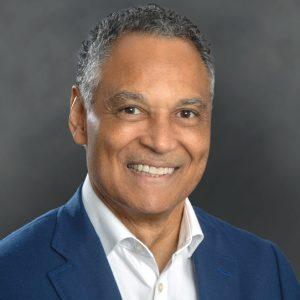
Tony Spearman-Leach, GPC, CFRE, CNE is senior director of Institutional Advancement at the U.S. Congressionally chartered National Academy of Public Administration. His email is spearmanleach@gmail.com