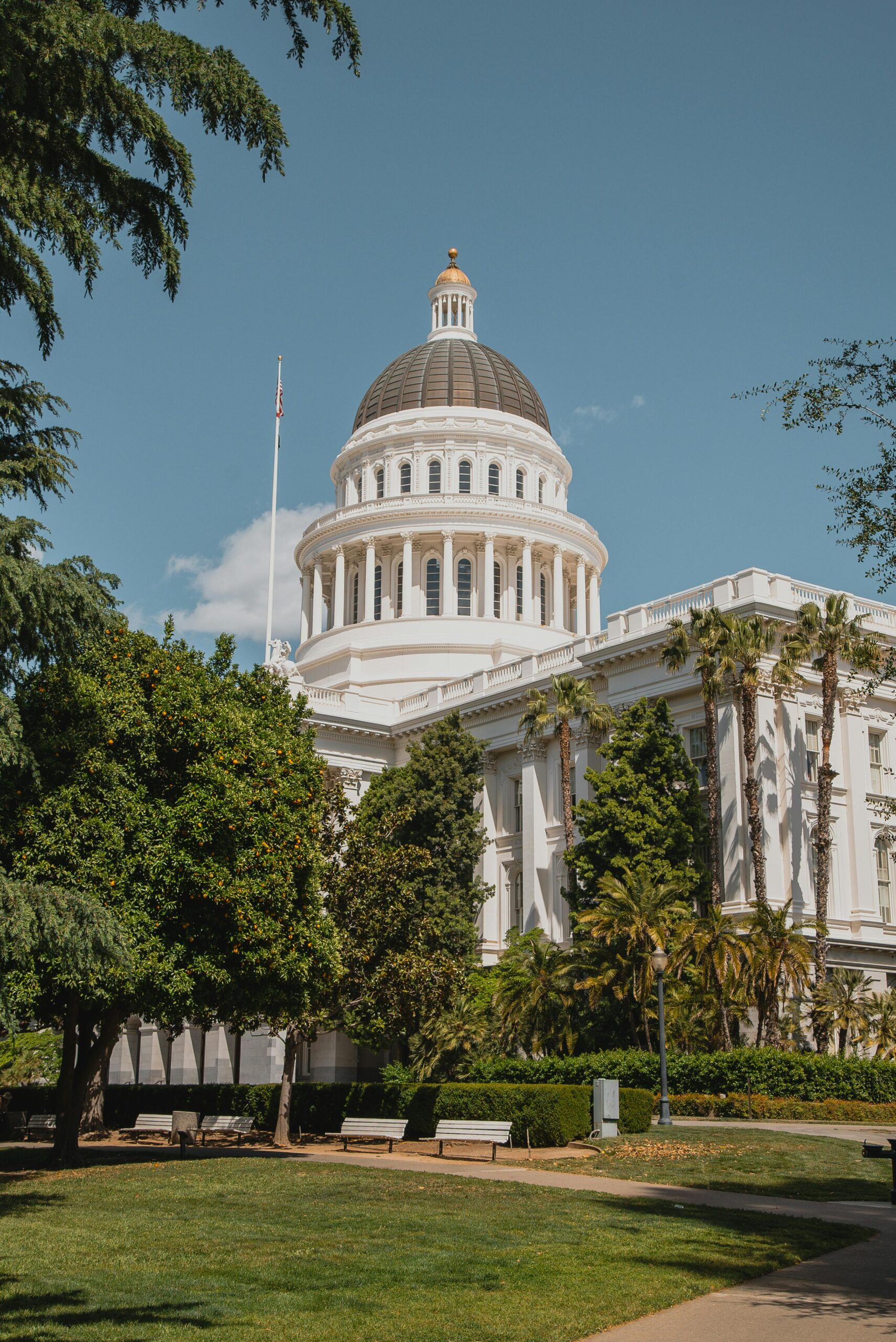
(California State Capitol photo via Pexels)
The clock is ticking for all nonprofits seeking to raise funds online from California donors while using constituent relationship management (CRM) platforms. Nonprofits not in compliance with the California Attorney General’s Registry of Charities and Fundraisers’ paperwork requirements have until January 15, 2026 to file their forms and submit fees.
The need to register has its roots in California statute AB 488, which was signed into law in 2021, implemented on January 1, 2023, with civil penalties applicable as of 2024. Under AB 488’s stipulations, fundraising platforms were subject to additional scrutiny regarding fees, how they held money contributed to nonprofits through them and the timeliness with which donations were passed along to the nonprofits.
Fundraising platforms were required to verify exempt organizations held good standing with the California Attorney General’s office, the Franchise Tax Board and the Internal Revenue Service before they were used. Good standing includes making sure a given nonprofit is up to date on various tax and registration filings.
“This added a whole new set of entities into that regulatory framework,” Geoff Green, CEO of the California Association of Nonprofits (CalNonprofits) told The NonProfit Times. “Ultimately, what we’re trying to do is protect the integrity of the donor-nonprofit relationship. Any entity that inserts itself in between, like a credit card processor or, in this case, fundraising platform, had to make sure their donations were received promptly and also that those donations are acknowledged.”
The registration requirements initially took effect on June 12, 2024. An online portal, which will provide transparency regarding an organization’s status as well as highlighting specific opportunities to quickly reconcile non-compliance issues, is scheduled to come online in spring 2026. But, the good intentions of the law immediately ran into real-world problems.
The first issue was that the fundraising platforms were the ones receiving updates regarding a given nonprofit’s status. “One of the unintended consequences was it created a system whereby fundraising platforms ended up being the messengers that a nonprofit was quote-unquote out of compliance with the DOJ,” Green said.
The second issue was that California’s registration system was woefully behind and under-powered in terms of providing adequate resources to confirm a given nonprofit’s good standing. California hosts more than 109,000 nonprofits, according to Green, and that figure doesn’t include out-of-state organizations that want to fundraise in-state. More than 30,000 501(c)(3) nonprofits were found to be noncompliant during an August 2025 hearing.
“What that said to us was that was not a problem of nonprofit negligence or misbehavior,” Green said. “That’s an administrative problem.”
Reforms under AB 488 address these and related concerns, including haphazard communication from the California Department of Justice in which letters alerting nonprofits to the lack of compliance might be sent to out-of-date post office boxes. Additionally, reasons for non-compliance could be trivial, such as an unsigned line or an unchecked box on a form or a payment not being properly recorded. And with much of the communication being done through the mail, resolving — or even being alerted to — issues often took inordinate amounts of time.
Leaders at fundraising platform GoFundMe elected to advocate on behalf of their clients. The company banded with nonprofit leaders, sector advocates and CalNonprofits to help shape reforms and updates to AB 488.
“We worked directly (with the California government), focusing on these policy questions and less on the individual cases,” Margaret L. Richardson, chief marketing and corporate affairs officer for GoFundMe, told The NonProfit Times. “When there were individual cases, we directed them to follow up with all of the relevant stakeholders in the California Attorney General’s Office. The reason we decided a policy solution was necessary was because we were hearing stories, not only of customers, but nonprofits around the country that were finding themselves in these circumstances,” she said. “CalNonprofits, similarly, was hearing these stories, and so together we pushed for practical solutions that protected donors without unintentionally cutting nonprofits off from the critical fundraising that they need, especially during this peak giving season at the end of this year.”
The efforts were successful. The California Department of Justice issued two significant updates to its policies early in December 2025. The first was a pause in new non-compliance designations through spring of 2026, when the new portal is scheduled to come online. Second, streamlined resolution of standing status enabled more than 16,500 nonprofits to gain their “good standing” designation, although they still have to have their paperwork in order by January 15, 2026.
“That enabled them to fundraise online without any risk of disruption by the online platforms being barred from processing their payments or otherwise in this really critical season for charitable contributions,” Richardson said.
Nonprofit leaders looking to verify their registration status may do so here: https://rct.doj.ca.gov/Verification/Web/Search.aspx
At least one California fundraising platform has already allegedly run afoul of what AB 488 was designed to protected against. Online fundraising platform Flipcause filed for Chapter 11 bankruptcy in mid-December, weeks after California Attorney General Rob Bonta sent the Oakland, California-based company a cease-and-desist order. In the order, Bonta alleged Flipcause had not registered with the Registry of Charities and Fundraisers or provided any reports, despite a request to do so issued in 2019.
The order also alleged that, since 2023, Flipcause had failed to remit more than $750,000 in donations to several nonprofits, including $144,746.14 to San Francisco, California-based art space Intersection for the Arts; $126,809.95 to CityLax, a New York City-based youth lacrosse organization; and $76,381.86 to the East Oakland Collective, a community organizing nonprofit, among others. The order sought $70,000 in penalties from Flipcause.
In a December 19 declaration from Flipcause, Executive Chairman Emerson Ravyn claimed Flipcause’s sole payment processing vendor, informed the firm on December 4 it would no longer do business with the platform. The move allegedly was done “without notice or explanation,” according to the declaration, and that the processor was alleged to be holding more than $1 million of Flipcause’s funds.
Ravyn further claimed the company had been considering strategic alternatives, including a potential sale of the business.
As part of that declaration, Ravyn asserted “[T]hat the Attorney General lacks jurisdiction because Flipcause does not solicit charitable contributions, does not receive or hold charitable assets, and does not operate as a charitable fundraising platform as defined by statute. Flipcause further asserts that its long-standing Merchant-of-Record and Agent-of-Payee structure places it outside the regulatory framework applied in the order.”
Flipcause representatives did not respond to a phone call nor an online message seeking comment.