(image from pexels.com)
Social media use is modestly associated with several favorable wellbeing outcomes, but the relationship becomes less straightforward when looking at the amount of time spent on social media, according to Gallup’s new report “State of the World’s Emotional Health 2026,” released in partnership with the World Health Summit.
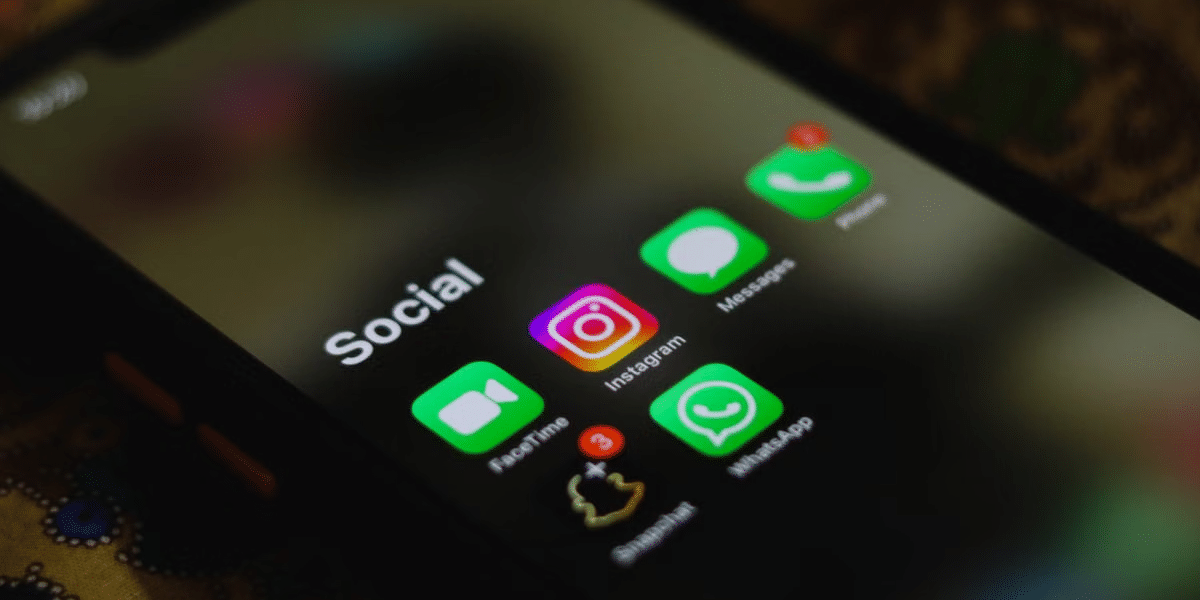
Meta reports that 3.56 billion people — more than four in 10 people worldwide — use at least one of Facebook, Instagram, Messenger or WhatsApp platforms on an average day.
Questions about social media’s effects on health and wellbeing have taken on greater urgency as its use has become widespread. Concerns about possible harms have led governments to consider or adopt measures ranging from age restrictions to efforts to limit addictive platform features, according to Gallup’s authors.
Research so far offers a mixed verdict on the relationship between social media use and wellbeing:
* A large meta-analysis, primarily based on studies of adolescents and college students in North America, found small associations of social media use with higher depression and anxiety, but also with greater social wellbeing.
* A 2025 World Health Organization review of research on digital technology and youth mental health also reflects this complexity. Focused on children and adolescents, the review found both positive and negative associations between technology use, including social media, and wellbeing. Outcomes varied depending on who was using the technology, what they encountered and when, why and how much they used it.
* More recent research has expanded the geographic scope while continuing to focus largely on younger people. The “2026 World Happiness Report,” for example, examined social media use and life satisfaction among 15-year-olds in 47 countries. Higher use was generally associated with lower life satisfaction, particularly among girls, but the strength of the relationship varied across regions.
In the same report, other researchers documented substantial evidence of harm in the United States using a variety of methods, including surveys of young people, parents, teachers and clinicians as well as experiments.
Because wellbeing does not simply rise or fall as time spent on social media increases, Gallup’s research among people aged 15 and older in 97 countries examines time spent in three categories: no use/low use (no use or less than 30 minutes a day), moderate use (30 minutes to less than two hours a day) and high use (two hours or more a day).
Across the countries surveyed, data show:
* People are most likely to be using social media moderately. A median of 39% of adults fall into this group, compared with 31% with low use and 27% with high use.
* Moderate use is associated with a more favorable wellbeing profile across many measures. Moderate users report fewer negative emotions and experiences than high users and more positive emotions and experiences and higher life evaluation than low users.
* High social media use is associated with lower life evaluation in high-income countries. In many high-income countries, such as the United States, time spent on social media is associated with lower life evaluation, whereas in countries that are not high-income, it is associated with higher life evaluation or has no effect.
See the full report by clicking here.