Executives from just fewer of 400 nonprofits have signed their organizations onto a letter asking the federal Office of Personnel Management to not cancel the annual Combined Federal Campaign (CFC) which has raised nearly $8.7 billion since its inception.
The letter from 390 organizations was sent to Scott Kupor, director of the U.S. Office of Personnel Management (OPM). “On behalf of The Nonprofit Alliance and 389 other co-signers that represent a broader coalition of charitable organizations participating in the Combined Federal Campaign (CFC), we write with urgent concern regarding reports that OPM is considering eliminating the Combined Federal Campaign entirely for 2025, with the campaign scheduled to begin in October.” The letter was signed by The NonProfit Alliance and a coalition of CFC participant charities.
A separate letter stressing the need for the CFC was sent to Kupor by the National Council of Nonprofits and United Way Worldwide.
As previously reported in The NonProfit Times, OPM said via a statement to media that federal agencies are being asked to pause all CFC support activities while the administration decides whether to continue the program. The Washington Post reported that the OPM issued a stop work order on August 26, which will impact the campaign’s website construction and launch.
A nonprofit executive told The NonProfit Times that “contractors who work on CFC were given verbal stop work orders last week, but not in writing.” The coalition has submitted “an emergency meeting request on behalf of coalition partners to discuss this urgent matter with you. We respectfully request your commitment to suspend any action to eliminate the CFC for 2025 and to engage with stakeholder organizations to ensure the program’s continued success.”
The CFC has raised nearly $8.7 billion for charities since its formal inception in 1961, although some type of federal employee giving has been in place since the 1940s. The CFC raised more than $66 million during 2024, with the average pledge increasing to nearly $1,000, CFC data shows. The CFC was created via executive order during the administration of President John F. Kennedy.
The CFC sends money monthly to more than 4,400 charities designated by federal employees, retirees, and contractors with donations made through payroll deductions. The number of designated charities declined from 7,515 in 2017 to 4,400 in 2023. The value of volunteer hours from 2017 to 2023 ranged from $1.9 million to $3.04 million, which is added to the reported donation figure.
Nonprofits will not only lose the revenue from donation stoppage, but also be out of pocket for cash spent on preparation. “Nonprofit organizations participating in the CFC have already spent millions of dollars in application fees and marketing materials for the new campaign year. Finding out that the program may be shut down just as it is about to begin would be yet one more financial blow to the sector,” said Shannon McCracken, president and CEO of The Nonprofit Alliance in Washington, D.C.
The charities thanked “the White House, the Office of Personnel Management, and Congress for their collective decision not to pursue the harmful 10% administrative fee on federal employee payroll deductions during Budget Reconciliation proceedings. This decision demonstrated clear recognition of the CFC’s vital role in supporting our nation’s most vulnerable communities and preserving the integrity of federal employee charitable giving.”
The signers reminded officials of the federal government’s previous support. “The elimination of the CFC would also represent a significant departure from the federal government’s longstanding commitment to fostering a culture of service and civic engagement among its workforce. Federal employees have consistently demonstrated their dedication to supporting charitable causes through voluntary contributions, and the CFC provides an efficient, transparent, and administratively streamlined mechanism for channeling this generosity where it is most needed. The program serves as a tangible expression of federal employees’ commitment to public service that extends beyond their official duties.”
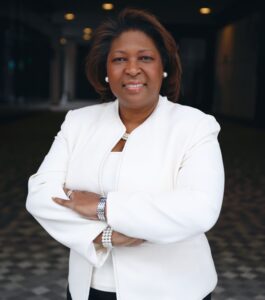
Eliminating the CFC would do tangible damage to nonprofits, particularly in the Washington, D.C, and surrounding communities. “A pause in CFC giving will be devastating for hundreds of area nonprofits that rely on this essential funding each year. Many of United Way of the National Capital Area’s partners receive between $100,000 and $700,000 yearly,” Rosie Allen-Herring, president and CEO of United Way of the Capital Area, told The NonProfit Times in exclusive comments.
The nonprofits “rely on this steady stream of support for critical programs that provide food, shelter, healthcare, and essential services to thousands of residents each day. Organizations in the National Capital Area that will be impacted by this federal change include the Capital Area Food Bank, So Others Might Eat, Arlington Food Assistance Center, and Martha’s Table, among hundreds of others,” she said.
United Way of the National Capital Area has raised more than $225 million through the CFC since 2004 for hundreds of nonprofits in the Washington, D.C. The United Way of the National Capital Area CFC campaign in 2024 garnered $5.7 million to support nonprofits in the region, Allen-Herring said.
“With the many reductions in force that have occurred this year, many federal workers who were once some of our most avid donors could become United Way of the National Capital Area clients themselves. Monies from the CFC are needed now more than ever,” she said.
The text of the letter is slightly more than two pages but runs for 11 pages when adding all of the organizations from around the nation, including the American Diabetes Association, America’s Best Charities, CASA of Central Texas, Catholic Charities of the Diocese of Arlington, Christian Military Fellowship, DAV Charitable Service Trust, DC Central Kitchen, Earthjustice, Jewish Council for the Aging of Greater Washington, Marine Corps-Law Enforcement Foundation, Meals on Wheels America, Prostate Cancer Research Institute, Ronald McDonald House Charities of Northeast Ohio, United Way of the National Capital Area and Wounded Warrior Project.