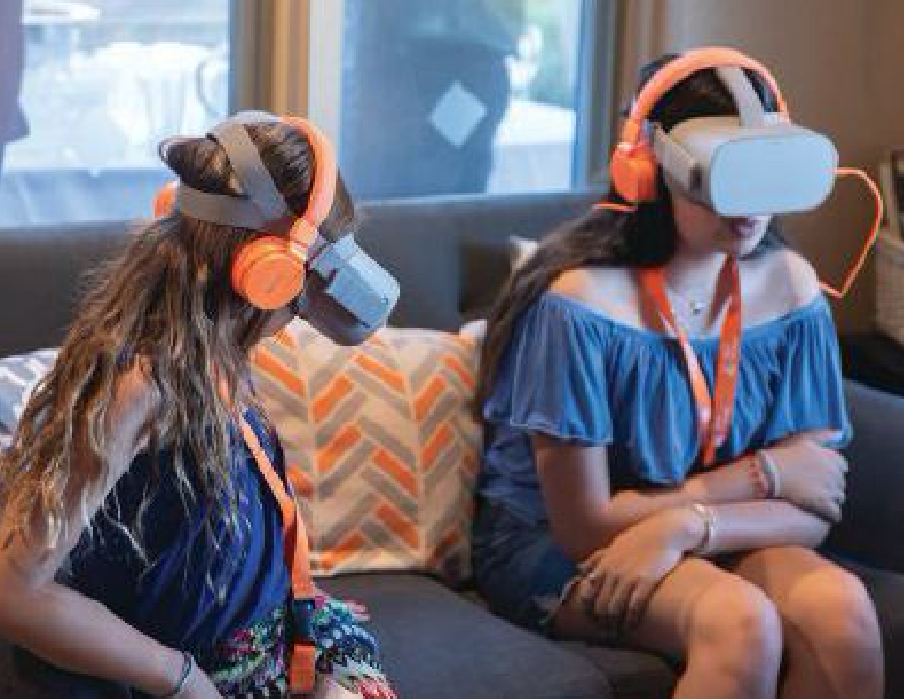
Virtual Reality (VR) can create a social peer-to-peer dynamic at your annual gala, bringing a slice of gamification and competition among iPad-wielding major donors. VR doesn’t always have to be something that nonprofits trot out only for annual events.
Best Friends Animal Sanctuary put a few hundred of its donors in VR headsets at its gala but the Kanab, Utah-based nonprofit also is using VR in ways even staff did not expect.
For one, Sue Citro did not expect to use VR at the sanctuary, about 200 miles northeast of Las Vegas. “I figured the sanctuary is all around us. Why would we need it?”, said the organization’s chief experience officer. VR has helped with elderly people who visit with a group but might not want to get into a van or traverse a cat walk. It’s also helped on rainy days or when there are just too many people on a particular day for tours, she said.
“It’s transformational on an organic level,” said Citro, adding that VR helps major gift donors share their passion and show why they’re committed to the cause.
“It’s an investment that continues to pay dividends,” Citro said, helping to engage with people in ways that are more meaningful for them. “It’s a level of immersion for donors,” she said.

VR “helps donors understand where they’re going before they get there,” Citro said. It’s a tool for those who made a bequest or charitable gift annuity (CGA), and aren’t going to be able to go to the sanctuary, to feel like they have, she said. According to Citro, one planned giving officer at the charity has a date with a donor on her birthday each year who requests the VR headset. “There’s something really special about being able to see it, and talk about the impact of your gift,” she said.
“Nonprofits need to tell transformative stories,” said Dave Walsh, founder and CEO of emergeStudios, which partnered with Best Friends on its VR program. It’s interesting to think about VR beyond the scope of an event and how media can be used holistically, he said. Walsh worked with Make-A-Wish to help grant a wish to a child who wanted to be a quarterback. The child was unable to move his legs like he used to and could no longer play football due to complications from a brain tumor.
With the help of emergeStudios, Make-A-Wish brought his team together and simulated a football game in VR. “In the process, Make- A-Wish has a great story,” Walsh said. “How do we bring donors on that journey, creating a more immersive, transformative media experience, whether virtual reality or something shown at an event,” he said.
Plenty of research shows the effects of positive versus negative messaging on donors and fundraising habits, Walsh said. Are you looking for a sympathy donation or a transformative donation? Walsh questioned whether a sympathy donation will keep donors engaged for a long period or whether it will inspire them to advocate and tell your story. At Best Friends, “the story wasn’t about this dog with three legs but how amazing this dog with three legs is,” Walsh said.
Transformative messages are more powerful for younger demographics. “Looking at Millennials and Generation Z and how they want to engage, they want to make an impact and find causes they support but don’t necessarily know how. It’s also a demographic that wants to be inspired,” Walsh said.
Make-A-Wish built a mobile app at Wish-VR.com but VR also can be a simple concept. Google Cardboard essentially can turn a smartphone into a basic VR headset. Cardboard can be bought at volume for about $2 to $3 and branded for your organization. “Sit down with someone, give me a tool to easily advocate and tell your story, bring them into your world. That is transformational in itself,” Walsh said. “At the scale of activation, that’s something you can give to someone and tell your story in a different way,” he said. Google Cardboard could have the potential to revamp direct mail, Walsh said, since it can be shipped flat in an envelope.

“We see this as an investment that will continue new dividends going forward,” Citro said. After trying it at their gala, Best Friends has incorporated VR into other events, such as Strut Your Mutt, which takes place in 14 cities. “People lined up. They were talking about it and excited,” she said. “It’s so awesome when you see that donor light up and feel like you connect with that passion. You know they’re committed but you see that little light bulb go on and hear them talk about your cause even more passionately than before; that’s where we’ve gotten excited,” Citro said.
It took about four-and-a-half months for Best Friends to create the VR film, said Citro, adding that it was important to work with a partner like emergeStudios to access the special VR cameras rather than purchase them. The more time you have to spend the better, she said. “What’s a story you haven’t been telling that you want to elevate,” Citro asked rhetorically.
VR films can cost $20,000 to $30,000 to create and go up from there, even hundreds of thousands of dollars, according to Walsh. “Lots of times, it’s thinking through how you want to enhance the communication channel, and each time you do that, you raise more money,” he said. In the early days of VR, filming was very difficult because it required numerous cameras and lens and had to be done manually; it was more about the technical feat of making video, Walsh said. He said he’s starting to see commercials for major companies that are tackling big social issues that could lead to funding from companies for social impact.