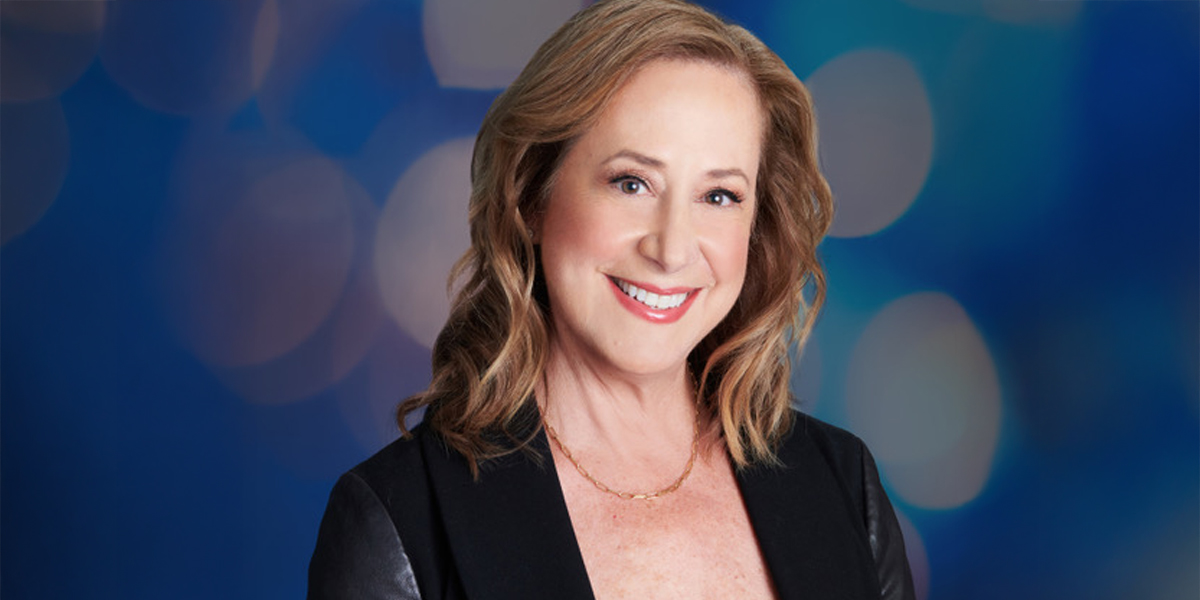
As president and CEO of the Ad Council, Lisa Sherman is president and CEO of the nonprofit Ad Council. She coordinates marketers and marketing resources in creating public engagement campaigns. Before joining the Ad Council in 2014, Sherman was at Viacom, where she launched and led Logo TV, the first cable network for LGBTQ audiences.
She has also held a number of senior operating roles at Verizon, IPG agency Hill Holliday and the Women’s Sports Network, the VC-backed marketing company she co-founded.
Sherman is passionate about music (especially Stevie Nicks), a “lifelong tortured Philly Eagles fan and an eternal optimist.”
Q1: What was the biggest shock and/or opportunity you experienced when you moved from the commercial world to the nonprofit world?
LS: Purpose has been at the heart of my career from day one, so making the move to the Ad Council was both a dream come true and natural next step. There was – and still is – an authentic connection between the critical issues we work on at the Ad Council and the strategic business goals of my peers.
What’s been so rewarding is how many colleagues from my corporate days have remained incredible partners to this day, creating more and more opportunities to make an impact on everything from mental health to firearm injury prevention and the overdose crisis.
Q2: How have trends in messaging – such as the balance of entertainment versus information, changes in approaches, or whatever else – affected how The Ad Council helps stakeholders shape messages?
LS: We’ve learned that there is no such thing as an effective one-size-fits-all approach. We start with data to gain audience insights, then tailor our large-scale efforts to specific audiences – whether that’s working with trusted messengers and influencers through our Creators for Good program, localizing our national efforts on issues like gun safety and mental health, or building custom partnerships on the platforms our audiences use most. It’s about meeting our audiences where they are, then showing up authentically with best-in-class creative and vetted resources to inspire action.
Q3: What has the increasingly fragmented media landscape, both in terms of number of channels and number of outlets, meant regarding designing effective campaigns?
LS: With the rapidly evolving media landscape we’ve been able to reimagine how we’re reaching our audiences effectively, especially on complex issues.
Recognizing that the messenger is just as important as the message itself has been a significant part of that evolution. To cut through the fragmentation you must understand your audience and who they trust.
Since 2015, our Creators for Good program has set the standard for engaging trusted messengers in ways that truly resonate, working with everyone from Elmo to pediatricians, Pope Francis and Megan Thee Stallion.
Q4: You have talked about moral and ethical leadership being must-haves when addressing societal problems. What is your advice to other nonprofit leaders during times of significant change?
LS: You must stay the course and trust your values. Change is inevitable – people say it all the time, but it’s true. As leaders, it’s our job to remain true to the purpose of our work, find a way through and help our teams to share that forward vision. Naming and holding to your principles will keep you and your teams focused on making a real impact, no matter how much the world shifts around us.
Q5: Given an unlimited budget and total creative control, what is your dream ad campaign?
LS: I’d love to bring together the biggest names in music for something monumental. Could you imagine long-time legends and breakout stars working on a custom song about how we’re stronger when we come together? It would be everyone from Paul McCartney to Cynthia Erivo and Brandi Carlile. Now that would be something.
Q6: What is the most influential advertising copywriting or marketing book you have read?
LS: I’d have to say “Breaking Through” by my dear friend Sally Susman. It’s a masterclass in the power of language to change hearts and minds. She gives an invaluable look behind the scenes at what we both know to be true – communications can change the world.
Q7: You have urged emerging leaders to use their voices for greater good and change, even in the face of challenges. As you look at the generations that are coming after you, what have you seen regarding their willingness to embrace your urgings?
LS: Mentorship is a real passion of mine, and I’m consistently inspired by the next generations already making their mark. For them, social impact isn’t optional – it’s expected. That’s incredibly promising. I see it in our Ad Council staff, too. There’s such passion and dedication for the work they do every day. It keeps us all going.
Q8: Given the division within the United States, how does your organization inspire action on some of the country’s most complex issues?
LS: We’ve addressed the toughest issues facing people in the United States with a nonpartisan, nonpolitical approach for more than eight decades. That’s part of what makes our work so impactful, it transcends division. Take youth firearm injury prevention as an example.
Our new “Agree to Agree” campaign is all about helping people to see that we really do agree on more than we think, including that firearms should not be the number one killer of children and teens in the United States. Once people can see that common ground already exists and use that as a foundation, we can start to work toward a solution together.
Q9: The Ad Council is famously known for its public education messages, but it also hosts a handful of committees. What do you think – whether it is a committee or not – is your organization’s most unsung gem?
LS: I’m very proud of the work that we’re doing through the Ad Council Research Institute (ACRI). Research is at the core of absolutely everything we do at the Ad Council, and ACRI lets us bring that same rigor and insight to our nonprofit, brand and corporate partners.
We’ve worked on everything from the power of creativity to electrification and trusted messengers, helping partners to identify the right message, the right messengers and the right channels to deliver impact in a strategic way.
Q10: How many times have you seen Stevie Nicks in concert, and what have been the biggest lessons you have taken from either her life or her songs?
LS: I’ve seen Stevie Nicks perform more times than I can count. The biggest lesson I’ve taken from her music and her life is that vulnerability is power. Stevie never hides her heartbreak, her longing, her loss. She owns it.
Songs like “Landslide” or “Silver Springs” aren’t just music, they’re emotional blueprints for resilience. As a leader, that’s stuck with me. You don’t have to be the loudest voice in the room. You just must be real. And if you’re real, people will follow you, because they trust you. Stevie taught me that.
BONUS Question: What is your all-time favorite Ad Council commercial or print ad or message?
LS: Last year we celebrated 80 years of the iconic Smokey Bear and that was a blast. I mean, he’s the longest-running PSA campaign in our country’s history. There’s a reason why. It doesn’t get old seeing how much his wildfire prevention message still resonates.