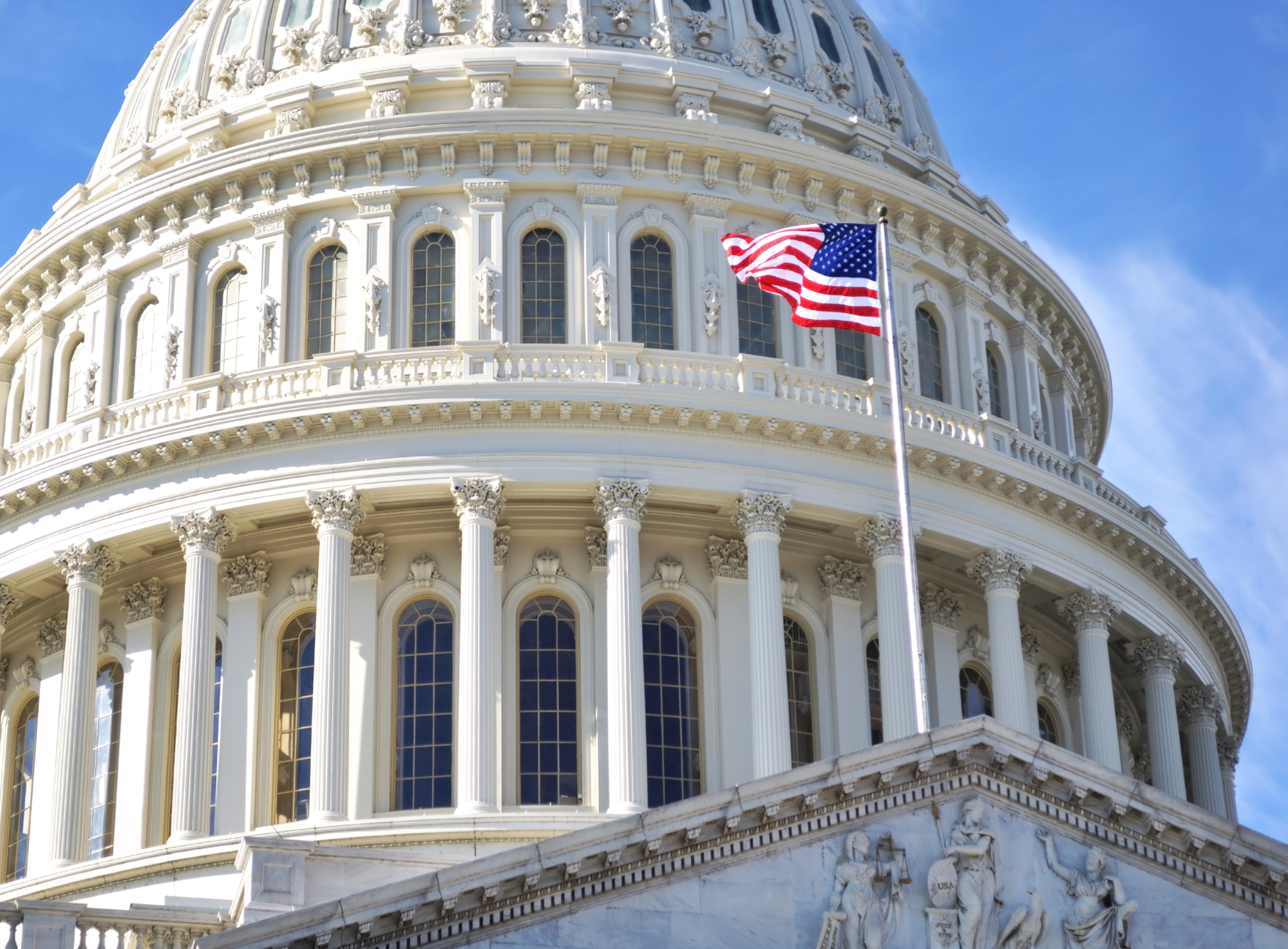
(Photo via Deposit Photos)
It took a tie-breaking vote by Vice President J.D. Vance, but the One Big Beautiful Bill Act passed the U.S. Senate and is headed back to the House of Representatives for reconciliation before going to the White House for the signature of President Donald Trump.
The legislation is expected to reduce revenue to nonprofits by tens of billions of dollars but those numbers are fungible until the House of Representatives finalizes its legislation.
While leaders of the charitable sector were able to get a few items included and others taken out, the package still presents expensive challenges for charities.
Members of the U.S. Senate who voted for the bill expressed reservations. Sen. Lisa Murkowski (R-Alaska), who had voiced strong opposition before voting for the bill, told reporters she hopes the House sends it back to the Senate. “We do not have a perfect bill by any stretch of the imagination,” Murkowksi said, answering questions to a pool of reporters.
The three Republicans voting against the bill, which forced Vance’s tie-breaking vote, were Susan Collins of Maine, Tom Tillis of North Carolina and Rand Paul of Kentucky. Every Democrat voted against the bill, as did Independents who caucus with the Democrats, to reach the 50-50.
The wins for charities include incentives for charitable giving for non-itemizing taxpayers. “While the final bill includes both helpful and harmful provisions, it overall reduces resources available to nonprofit organizations, negatively impacting their ability to provide essential services to their local communities. The final bill creates a new universal charitable deduction that is estimated to generate $74 billion over 10 years for nonprofit organizations,” said Diane Yentel, president and CEO of the National Council of Nonprofits.
“On the other hand,” she continued, “the bill includes several provisions that disincentivize charitable giving by individuals and corporations, which are estimated to reduce resources for nonprofit organizations and their communities by at least $81 billion over 10 years. The bill also harms millions of people by taking away their access to healthcare and food assistance, putting greater pressure on nonprofit organizations to help meet these needs.”
The bill makes permanent a partial tax deduction of $1,000 for a single filer and $2,000 for joint filers who are non-itemizers. It is a renewal of a tax break that expired at the end of 2021. The House version was for $150/$300.
Pulled from the bill under heavy lobbying from nonprofit leaders was language that would have allowed the U.S. Secretary of the Treasury to pull the tax-exempt status of a nonprofit without due process after designating an organization a terrorism supporting organization. Organizations would have needed to litigate to get the status reinstated.
Fundraisers expressed some relief that the tax deduction might end up in the final legislation. “Making the charitable deduction permanent is a meaningful step toward expanding generosity in every community,” said Brian Flahaven, chair of the Charitable Giving Coalition. “When this incentive was temporarily available through the CARES Act, it inspired millions of new donors and helped sustain charitable work during a critical time. Making it permanent — and expanding it — will help ensure that every taxpayer has a pathway to support the causes they care about and is expected to increase charitable participation and support among grassroots donors dramatically.”
Cuts to Medicaid and supplemental food program will put a greater burden on charities. “Because the tax bill may result in fewer resources for nonprofit organizations, these vital institutions may be forced to cut back on services or serve fewer people,” said Yentel. “This harm is compounded by other attempts to reduce or eliminate funding to nonprofit organizations as the result of arbitrary and unlawful cuts of Congressionally approved spending and reckless federal funding freezes by the Trump administration.”
Among the more challenging items for the sector are a 1% floor on corporate charitable donations, which would deny corporations a charitable deduction for the first 1% of taxable income donated. A new study by Ernst & Young, commissioned by Independent Sector, estimates this change could reduce charitable giving by $4.5 billion annually. Another issue is the 35% limit on all itemized deductions. The provision would reduced the incentive to give among some of the most generous donors. There is also a 0.5% adjusted gross income floor on charitable deductions for itemizers along with a cap on the value of itemized deductions.
College and university endowments have been targeted by the administration. The legislation applies a 1.4% tax on colleges and universities with a “student adjusted endowment” between $500,000 and $750,000. The percentage goes up to 8% depending the size of the endowment.
“Even while the legislation increases the federal deficit, it raises government revenue from provisions impacting the sector and cuts funding for programs that provide vital support to people our sector serves. This approach is misguided” Independent Sector President and CEO Akilah Watkins, Ph.D., said via a blog posting. “Furthermore, two of the most damaging provisions in this bill — limiting the value of itemized deductions and creating a floor for corporate giving — would eliminate far more in charitable donations than they would raise in government revenue. These provisions are a lose-lose-lose for taxpayers, for nonprofits, and for communities. Independent Sector will continue to advocate for their removal,” she said via a blog posting.
Foundations also were targeted in the legislation. “The Senate-passed reconciliation bill represents a clear improvement over the House version in the areas affecting charitable giving and philanthropy, reflecting meaningful changes that respond to concerns raised by our sector. At the same time, we remain deeply concerned that several provisions in the bill — even in its improved Senate form — risk discouraging charitable giving and weakening the charitable sector at a time when communities need it most,” observed Kathleen Enright, president and CEO of the Council on Foundations. “As federal funding decreases and community needs continue to grow, we urge Congress to protect — not penalize — philanthropy for its daily efforts to fill gaps and fuel opportunities in communities across America. The Council on Foundations will continue to advocate for a policy environment that supports generosity and enables the sector to respond to both urgent needs and long-term challenges.”