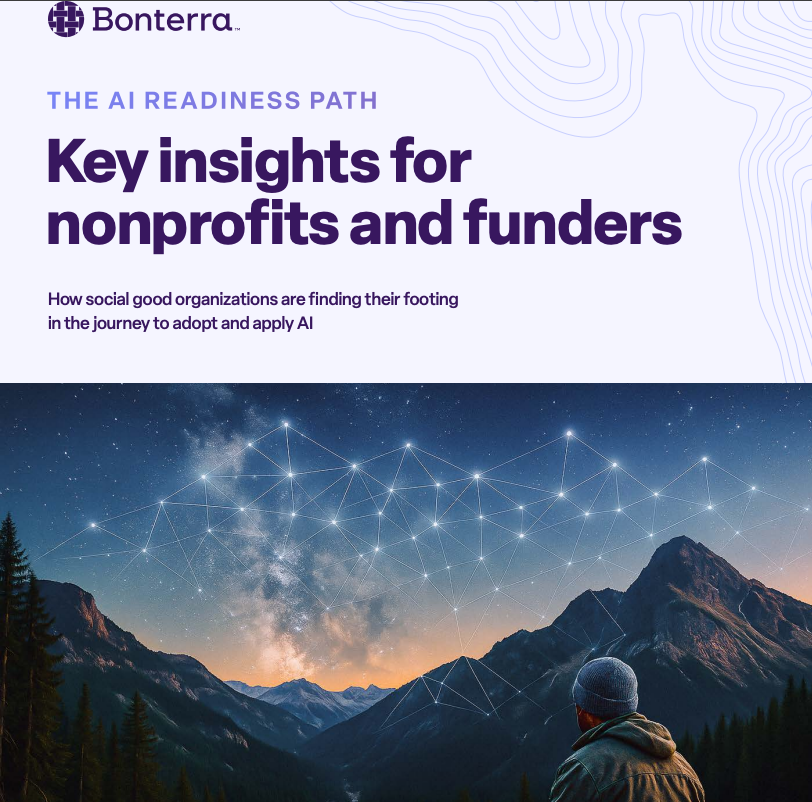
Artificial intelligence (AI) is rapidly reshaping the social good sector, from how funders evaluate impact to how nonprofits engage supporters. A new report from technology firm Bonterra, titled “The AI readiness path: Key insights for nonprofits and funders,” shows 91% of funders believe AI will positively transform philanthropy, corporate social responsibility (CSR), and grantmaking within three years,
However, nearly as many of the funders expressed concern regarding how technology could use nonprofit data or deepen inequities.
The report brings together two studies: one conducted by Hanover Research, which surveyed CSR and grantmaking program leaders and decision-makers, and another internal study by Bonterra, which surveyed nonprofits about their experiences with and expectations of AI.
Key findings show both widespread adoption and strong optimism:
* 91% of funders expect AI to have a positive impact within the next three years.
* 83% already have a positive perception of AI as a streamlining tool (e.g. monitoring budget allocations, evaluating program effectiveness, and visualizing impact data).
* 85% believe AI will help nonprofits optimize their grant applications.
* 87% agree AI use will benefit the overall efficacy of CSR initiatives and grantmaking.
“Funders and nonprofits are excited about AI’s potential but mindful of its challenges,” said Scott Brighton, CEO at Bonterra, said via a statement. “AI is fueling what we call the Generosity Generation, where data, insight, and human connection converge for greater impact. To adopt AI responsibly, nonprofits must prioritize data quality, transparency, and scalability. Funders are urging these steps, and Bonterra is committed to guiding organizations through challenges like cost, privacy, and automation risks so they can harness AI effectively.”
The study data showed opportunities and areas for caution:
* Top benefits: stronger nonprofit–corporate connections through volunteer and donation matching (84%), optimized grant applications and proposal quality (85%), improved data quality (64%), more accurate decision-making (61%), and better predictions of project outcomes (51%).
* Desired future uses: automating volunteer matching (91%), spending tracking (87%), and employee donation matching (83%) — all areas where funders see significant potential for efficiency and impact.
* Key challenges: concerns about how AI might use nonprofit data (92%), high technology costs (40%), over-reliance on automation (40%), trust in the delivery of accurate results (21%), and meeting regulatory requirements (30%).
* Top advice for nonprofits: prioritize data quality and security (82%), ensure transparency in decision-making (83%), and provide staff with adequate AI training to build trust (93%).
“Funders are embracing AI, but they’re also pragmatic,” said Kimberly O’Donnell, chief fundraising and engagement officer at Bonterra, said via a statement. “Many have already put effective safeguards in place, like transparency requirements and ethical guidelines, to reduce risks. Nonprofits can build on these practices by setting clear strategies for cost-effectiveness, human oversight, and data privacy, ensuring even resource-limited organizations can adopt AI responsibly and with confidence.”