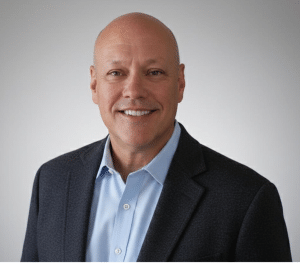
(Caption: Rosie Allen-Herring, photo courtesy of UWNCA)
Tens of thousands of federal employees are losing their jobs due to the sudden and drastic attempt to shrink the workforce and close agencies such as USAID. While the cuts are from programs in all 50 states and internationally, Washington, D.C. and Northern Virginia will be hardest hit.
That has Rosie Allen-Herring, president & CEO of the United Way of the National Capitol Area (UWNCA), strategizing with leaders at its more than 300 area partner agencies. “I believe we are in some intentional chaos and so it’s all about not reacting but responding to make sure we keep the focus where it needs to be,” she said.
“I say respond because you can’t help what’s happened. It is already a known fact that this is something we are going to be with and have to live with for quite some time,” she said. The decisions leaders must make are what is in their control and then how to deal directly with those elements.
“I think you’ll find the sector, in general, is prepared to continue to serve. The question becomes where is the balance between need and the resources to be able to help,” Allen-Herring said.
“We are in for some very very very tough times. It’s not business as usual. It’s business highly usual because it is going to be that much more that is going to be required of the sector,” especially those that are direct service providers, she said.
There are now thousands of government workers who find themselves needing to access services in certain parts of the safety net. She described the situation as “highly usual meaning that we are not going to stop what we are doing,” except that the number “will be exponentially higher.”
There are 1.3 million people in her service area, living in 560,000 household that were already on the edge of crisis prior to the layoff chaos. “When you live in a high-cost area, but you have an average salary, there is a gap between what it really takes to live in an area where you need a median income of $120,000 or so,” she said.
Another challenge is the federal poverty level is adjusted for inflation, but the elements determining the baseline number isn’t updated. “If you made $1 over it (the poverty line) you still don’t have enough to take care of your family but make enough to not qualify for services,” said Allen-Herring.
“Think about that part of the workforce that will now be out of a job. Those things we thought were pocketbook issues are going to become even more so,” she said. The area’s unemployment rate is expected to tick upward and the impact on the economy, because thousands of people no longer have disposable income to spend on goods and services, will be substantial. “That CPI (consumer price index) and the inflation rate is going to go up and that inflation rate had been the driver the Federal Reserve was using in determining when they would let interest rates go back down,” she said.
It will be about surviving before talking about thriving for the immediate future. “This cannot come off the back of, for lack of a better term, the average, every day American,” said Allen-Herring. It requires much larger resources and that comes with pros and cons. “Usually when you have a large benefactor sometimes it comes with strings, what that entity cares about,” she said and that’s where data — hard numbers and non-traditional sources of grants — come into play.
Everybody doesn’t get the same message when it comes to approaching funders. “It is about aligning with some of their strategic priorities. If you know a funder’s leaders care about education then “use the data that says how their investment in this work, will help improve those outcomes,” she said.
“It’s about moving the needle on some of the toughest outcomes, aligning with their corporate social responsibilities or corporate priorities” to demonstrate why that matters. The focus of the messaging has to be on those who the organizations are seeking to serve, not the politics of a divided nation.
“We have to concede that some real damage has already been done,” said Allen-Herring. It’s not as if the UWNCA and partner agencies haven’t previously pivoted. There have been 10 government shutdowns, five with democrat presidents and five with republicans in the White House The 2018-2019 closure lasted 35 days and 21 days in 1995-1996. The COVID epidemic also taught hard lessons on reconfiguring efforts.
“Many challenges are universal which means some of the solutions can be replicated,” said Allen-Herring. There are “decisions we have to make and questions we have to answer.”