(Photo Courtesy of Pexels)
BoardSource and the Association of Fundraising Professionals sit at the intersection of nonprofit governance and fundraising. From this shared vantage point, we see extraordinary opportunity and it begins with a question worth asking every nonprofit board member: Why are we here?
The question is not in the existential sense, but in the deeply practical one. Why did each of us say yes to this seat? What drew us to this mission? What do we believe is at stake if this organization fails — and what becomes possible if it thrives?
And underneath it all: How do we help make the dream that lives within this organization real?
When board members take these questions seriously, the answers do more than clarify governance. They become the foundation for everything the organization hopes to accomplish, including its ability to raise the resources needed to fulfill its promise.
Board service does not always begin with this kind of reflection. Talented, well-meaning people join boards for many reasons, but too many arrive without being invited to consider a more foundational question: What is my own purpose, and how does it connect to this organization’s purpose?
When a board member has considered their own personal purpose, the values they want to live out, the change they want to be part of, the legacy they hope to leave — and can see that purpose reflected in the organization’s mission — their engagement shifts from obligation to deep commitment. Without that intentional connection, the role can become transactional, gravitating toward what feels most familiar and measurable: reviewing financials, monitoring budgets, and evaluating the development team primarily on a single metric: how much money came in.
Imagine a different starting point. BoardSource’s governing framework, “Purpose-Driven Board Leadership” (https://bit.ly/46buaYu), is built on the idea that boards should prioritize an organization’s purpose, its fundamental reason for being, over the organization itself. This represents a shift from boards that are merely mission-driven to boards that are purpose-driven, centering not just on whether the organization is doing good work, but aligning its leadership with the deeper reason the organization exists.
When new members are immersed in this kind of culture, they encounter the mission not through a slide deck, but through direct engagement with the communities served, the stories of impact, and the lived reality of the work. They respect and love the ecosystem they operate in because they know and are often part of the communities, organizations, and stakeholders who have a role in fulfilling that collective purpose. They are asked to look around the boardroom and ensure they have people who are connected to their purpose and understand the communities working toward that purpose.
Over time, this shared sense of purpose, rooted in each member’s own convictions, becomes the board’s operating system — the lens through which every decision, every priority, and every conversation is filtered.
When that kind of purposeful clarity takes hold, something remarkable happens to fundraising. It stops being a department and starts becoming a shared commitment.
BoardSource’s “Leading with Intent” study confirms the opportunity: while boards generally do well with understanding organizational purpose and providing financial oversight, they consistently struggle with external responsibilities, including fundraising, advocacy, and community engagement. “Purpose-Driven Board Leadership” offers a path to close that gap — and the potential payoff for fundraising is significant.
Consider what is at stake. Data from the Association of Fundraising Professionals’ Fundraising Effectiveness Project shows that overall donor retention rates hover between 40 and 45 percent, meaning that nonprofits must replace roughly half of their donor base every year just to maintain revenue. First-time donor retention is even more fragile — only about one in four new donors gives a second gift.
At the same time, research estimates that the average development professional stays in their position for just 16 to 18 months. Results of a recent survey show 51 percent of fundraisers plan to leave their current organization within two years, and 30 percent intend to leave the profession entirely. Among those considering departure, 36 percent cited dissatisfaction with board support.
The Center for Effective Philanthropy’s “State of Nonprofits 2026” report found that 96 percent of nonprofit leaders said burnout was impacting their staff. These numbers describe a cycle that is difficult to break: fundraisers leave, institutional knowledge and donor relationships walk out the door with them, new staff must start over with unfamiliar portfolios, and donors who once felt a personal connection to the organization drift away. Revenue suffers. The mission suffers. And the board, which might have contributed to the conditions that caused the turnover, is left asking why the numbers are down.
“Purpose-Driven Board Leadership” offers a way to break that cycle — not with a single fix, but with a fundamental shift in how boards engage with the fundraising effort. When boards are aligned around purpose, it unlocks new possibilities.
First, fundraiser burnout decreases and morale increases. Development professionals who feel supported by leadership that understands and values their work are more likely to stay, to invest in long-term donor relationships, and to bring creative energy to their strategies.
When a board embraces “Why are we here?” as a living question, it sends a powerful signal to the development team: we see you, we understand what you do, and we are in this together. Fundraisers gain partners — board members who show up not just at quarterly meetings but as active participants in cultivation, stewardship, and storytelling. That kind of support is the single most effective antidote to the isolation and exhaustion that drive talented professionals out of the field. It can also reinvigorate the joy in their work.
Second, the fundraising effort itself becomes stronger. Fundraisers who feel supported by a purpose-driven board are not just chasing targets; they are advancing a mission that the entire leadership of the organization visibly believes in. They are evaluated not on a single metric, but on the health of the donor pipeline, the depth of donor engagement, retention, and long-term progress. They are invited into strategic conversations where their expertise and partnership are valued, not just their revenue projections. In short, they are treated and valued as the professionals they are — and they perform accordingly.
Third, donor relationships deepen and revenue grows over time. Board members who can answer “Why are we here?” with passion, specificity, and firsthand knowledge become authentic ambassadors. They do not need a script to talk about the mission or a hard sell to make an introduction. Their advocacy is grounded in conviction, and donors can feel the difference.
Purpose-driven board members see fundraising as a vehicle to fulfill the organization’s purpose, not just to raise revenue. They open doors, lend credibility, and create the trusted relationships that precede transformational gifts. When donors see board members and staff united by genuine purpose, they give again, give more, and become advocates themselves.
This creates a virtuous cycle: purpose-aligned boards become better ambassadors, better ambassadors create richer fundraising opportunities, and supported fundraisers do their most strategic work. Those fundraisers stay longer, build deeper donor relationships, and help generate sustainable revenue that deepens the organization’s impact.
The opportunity here is enormous. Any organization willing to build this kind of intentional alignment between board purpose and fundraising strategy will find that it is not just raising more money — it is building a culture of shared ownership, where the responsibility for sustaining the mission does not fall on one department or one person, but is woven into the fabric of leadership itself.
We write this together because we believe nonprofit effectiveness lives at the intersection of governance and fundraising. When these functions are aligned around a shared sense of purpose, the benefits extend to board members, fundraisers, donors, and the communities they serve.
It starts with a deceptively simple yet endlessly generative question: “Why are we here?” Ask it of your board during recruitment, orientation, retreats, and moments when the work feels routine, or the pressure feels heavy. Then ask the more personal question: Why am I here, and how does my purpose live in this work?
When board members can answer both questions with conviction, that clarity reaches the people who spend their days turning belief into resources and resources into impact. That is when fundraising becomes what it was always meant to be: the natural expression of a mission that people cannot help but support.
*****
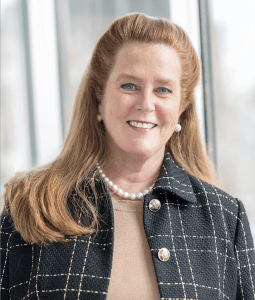
H. Art Taylor is president & CEO of the Association of Fundraising Professionals. Monika Kalra Varma is president & CEO of BoardSource.