Almost every social sector leader I’ve spoken with lately — each searching for how best “to be of use” in this unsettled time — oscillates between framing the work ahead as “defending and protecting” or “reimagining and rebuilding.” Both are vital in this fraught moment.
Defending democracy through litigation strategies and community organizing — yes. Designing the contours of a future inclusive economy where all people can flourish — yes. Both strategies are needed and will help shape the future.
There is another tension we need to hold: balancing “serving” and “solving.”
For several years, I used a chart in discussions with philanthropists and social sector leaders that showed a continuum stretching from serving to solving. The solving side was peppered with phrases like “system change,” “transformative scale,” and “population-level change.” The serving side had phrases like “meeting needs” and “addressing symptoms.” The not-too-subtle message was: if you are serious about making a real difference, you’ll focus on solving.
Now, I’m not so sure (and I’ve stopped using the chart). While inspired by the aspiration — and by the iconic stories of change such as the widespread adoption of hospice care, the dramatic reduction in tobacco smoking, the spread of safe surgery practices, and the marriage equality movement — I’m humbled by the degree of difficulty in engineering such outcomes, especially in times as volatile and uncertain as today.
It’s not that we shouldn’t aim high, or that these ambitious goals and strategies aren’t powerful for orienting action, but embedded in these stories is an implicit message: that simple, direct acts of help and generosity are a fool’s errand.
But, are they?
When you help 1,000 young people go to and through college, it isn’t enough — but it is something. And for those 1,000 people it might be everything. When you help 1,000 people have their medical debt erased, it isn’t enough — but it is something. And for those 1,000 people it might be everything. How do we value those real and concrete outcomes, measured not only in economic trajectories but also (and perhaps even more meaningfully) in the dignity, agency, and ease people gain? How do they help build a world of care we want to live in?
The Power Of Both/And
Is the counterfactual to philanthropists backing direct efforts that the same funding could otherwise have changed the whole system — or that government would have faced more pressure to do so? Maybe. But at what cost does the near-term neglect impose on those who are in the system, and for what duration should we be willing to wait?
We should, of course, vigorously pursue systems change. But that ought not be the singular aim of philanthropy, especially given the scale of fortunes accumulated during the past 25 years. Too often, this view leads people to delay or even step away from their giving, overwhelmed by how hard it is to get to “massive outcomes,” as one philanthropist put it when launching the family’s work.
Ten years later, that same philanthropist scaled back, disillusioned by the absence of transformative results. In a Bridgespan study of 15 of the most successful social change initiatives, the median time it took to reach their ultimate outcome was 45 years — and those were among the rare few that achieved such broad-based change.
We can fight for systems change and, at the same time, make a difference for those in need here and now. Impact is significant and real in both. In fact, the concreteness of the outcomes in the latter can be a bridge of connection and meaning that can be hard to hold onto in the more abstract (and vitally important) work of systems change.
That feels especially true today, given the miasma of fake news, exaggerated claims, and narrative wars that define our information landscape. The fog that envelops every issue leaves us all increasingly uncertain about what’s real, numb to underlying realities, believing we’re more divided than virtually every poll on issues says we are, and unsure about what any of us can do to make a difference. There is power in the particular — in the real — in helping actual people you can touch, see, hear, and feel. It’s a tether that feels increasingly important in a world so saturated with spin.
The False Choice Between Serving And Solving
The distinction between serving and solving might be a false binary anyway. Direct work — scholarships, land purchases, paying cash bail, canceling medical debt, direct giving — not only achieves immediate, on-the-ground outcomes but also often raises questions about why and how systems are broken. These efforts can challenge assumptions that keep flawed systems in place and set in motion new possibilities. In the actual unfolding of social change, serving and solving are much more entwined than we imagine.
Indeed, alongside the rise of nonprofit and philanthropic strategy over the last 25 years — often premised on setting a goal and working backward to what needs to be done — has been another way of thinking about how change unfolds, one that starts closer to the ground. These approaches begin where the action is, staying alert to pockets of positive deviance, insight, and energy, and fanning those sparks into flames when they appear. Think about the concepts of “emergence” (adrienne maree brown), “emergent coherence” (Indy Johar), “people first” (Wendy Kopp), and “stepping stone” models of change (Kenneth Stanley and Joel Lehman). See the accompanying box for links to these stories and references.
Take place-based work, for instance — the deeply relational, local, and direct work that is so needed in the current context. In these efforts, serving and solving blur, and the guiding question becomes: what do we need to do to make things better here? These approaches may feel hard, slow, and sometimes cost prohibitive — but in comparison to many of the strategies pursued today with their mixed results, are they? It isn’t either/or. We desperately need bold, creative strategies for reimagining the whole and aiming for widespread change — but we’ve underestimated, and too often dismissed, the power of direct impact and local action and the way that creates a reinforcing cycle that can shift the world and change the lives of all involved.
This isn’t a call to abandon strategic thinking or bold strategies; it’s a call to broaden the definition of success. We can make a meaningful difference while we think, strategize, and search for the transformative approach. The vast majority of philanthropists today aren’t choosing between direct impact and system change — they’re choosing between doing something and delaying or doing nothing at all. As donor-advised funds and unfulfilled pledges grow to astronomical levels, we all need to revisit our conception of what good, high-impact philanthropy looks like and how change happens.
Grace, Humility, And The Work Ahead
In this time of tumult, the false binary trap of serving versus solving points to a broader lesson: we all need to loosen our hold on old certainties. We need to balance advocacy with inquiry. We need to find firm footing from which to distinguish signal from noise, which is an increasingly hard task amid the cacophony. We need to be transparent and clear on what we believe and why we do what we do — and hold those beliefs loosely enough to see where we may be off-base and adapt.
And we all need to operate with more grace — for others and for ourselves. In this chaotic time, we are almost certainly going to get more wrong than in the past, but we can’t let that deter us or make us our worse selves. The future will be determined as much by how each of us moves in the world and does our work as by the strategies we devise.
This moment, as we look ahead and seek “to be of use,” calls for deep humility. As I reflect on having on an impact on the world, I often ponder a question that leaves me both humble and appreciative of the wide range of work people do to make the world better. My wife is a clinical psychologist. She works with five or six people a day, day after day, week after week, year after year. Each for anywhere from a few weeks to several years. In contrast, I advise leaders on strategies for “transformative scale” and have had the privilege of working with some of the most extraordinary change makers in the world, and of writing articles that aim to effect “population-level change.”
At the end of our lives, when we both look back, will it be obvious who has had a greater impact? I don’t think so. And, that’s okay. It’s the combination of all of us doing what we do — especially those close to the ground acting with generosity and care — that is the path to a better world.
*****
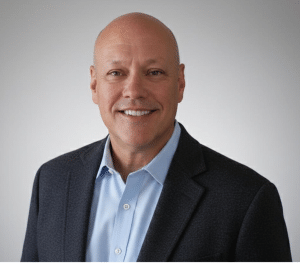
Jeff Bradach is partner & co-founder at The Bridgespan Group.