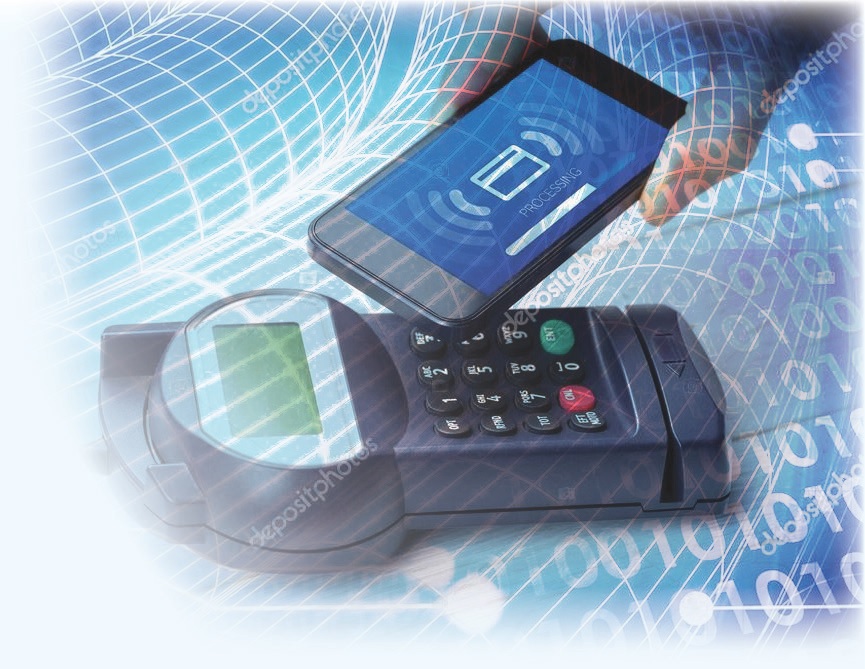
It’s something that can easily be taken for granted. You swipe your credit card and you get the benefit of a product or some goods or services within seconds.
Perhaps it’s a virtual Rube Goldberg machine whirring behind the scenes within that little kiosk or credit card terminal. Or maybe you’re now as convinced as your children that, yes, it really is magic. Whatever it is, it’s just the tip of the iceberg when it comes to payment processing.
It’s also not free. It costs money to move money — even for a nonprofit. Whether it’s receiving a donation or making a sale in the gift shop, payment processing will cost you — about 2 to 3 percent for the basics and it goes up from there.
The cost will depend on what a nonprofit’s strategy is and what needs to be done, specifically on digital fundraising, according to John Mix, director of marketing and communications at Catholic Medical Mission Board (CMMB) in NYC. Previously, he was senior director of marketing at Human Rights Watch (HRW) and director of digital fundraising and marketing at International Rescue Committee (IRC). There’s not a big difference between vendors in pricing and all know what the other is charging so it becomes more about functionality and flexibility, he said.
An organization like IRC raises funds internationally, accepting currencies in other countries, which brings a different set of needs. A charity that accepts payments at an event presents another challenge, Mix said. “Each year the technology and platforms keep changing,” he said.
Payment processors’ openness or fluidity to address, for example, emerging technology, is important so you’re not making choices of donor interaction based on limitations on payment processors, Mix said. The ability to relatively quickly adapt, with an open API to a new platform, is important.
For an event, weigh the pros and cons, Mix said. For an in-room event where donors might be wielding iPads, will any potential increase in room revenue be worth signing up yet another payment processor, he asked rhetorically, adding that some models charge a percentage of donations on top of a platform or licensing fee.

The fee structure is important but depending on what the purpose is and the strategy for the organization, that’s what is most important in a payment processor. “If it’s a percentage of the transaction versus a flat fee, steer your major gifts away from that to make sure you’re not paying a 5 percent transaction fee to the platform,” he said. “Knowing which donors and which channels they’re coming through, make that decision on which one is right for you,” Mix said.
“First do… research, with a side-by-side comparison as other vendors are treated. – John Mix
Mix suggested that charities first do their research, with a side-by-side comparison as other vendors are treated. “You don’t have to do a full RFP (Request For Proposal) but be clear on the fee structure and benefits,” he said.

Small, volunteer-driven charities usually only need a simple donation button on their website while larger nonprofits might need a processor to connect with a broader donor management system, according to Oktay Dogramaci, Head of Global Cause Solutions at processor PayPal. The basic charity rate for PayPal is 2.2 percent plus 30 cents per transaction, a rate that was set when the platform first launched more than a decade ago. “It’s become pretty standard pricing for nearly all payment processors,” Dogramaci said, adding that higher volumes can get better rates. Different platforms try to bundle other services together, not just donation processing, with some additional capabilities that might add to the price, he said.
Mobile first is a conversation we have most oſten… PayPal has focused on making recurring donations easy. – Oktay Dogramaci
Mobile donations continue to become a bigger part of the picture. Donation processing has trended a little behind the overall curve but has quickly caught up, with about 22 percent of donation transactions via PayPal made on mobile devices, according to Dogramaci. “That was super important for us to be focused on years ago,” he said.
Things that rose to the top in conversations with customers — even more than pricing — were different types of features, he said. “Mobile first is a conversation we have most often,” Dogramaci said, noting that PayPal has focused on making recurring donations easy. “These are the types of improvements that we try to improve in our flow without increasing prices.”

About 80 percent of card-processing costs are comprised of interchange fees and assessment fees, usually a percentage of the entire transaction that goes to the issuing bank, plus a fixed fee to the credit card network, according to Steve MacLaughlin, vice president, data and analytics, at Charleston, S.C.-based Black-baud. Some fees might look inexpensive but he advised nonprofit managers to take a close look at the fine print. A very low transaction rate could usually also entail a setup fee or monthly fee. Another thing that impacts the rate is the type of transaction. If the credit card is present for a transaction, say at a museum gift shop, that’s typically lower than an online transaction. The type of card (American Express is typically higher than others and the type of business (a gambling site versus a convenience store) also can influence the processing fee.
“Usually people understand that when you make an analogy to a bank account, which can have fees to conduct transaction. – Steve MacLaughlin

The reality is that most transactions operate in a range of 2 to 3 percent with an additional 15 to 30 cents per transaction, he said. You can negotiate it but never to zero. You might get close to cost but there’s still a cost of doing it, MacLaughlin said. Blackbaud’s current fee is 2.798 percent plus a 26 cents per transaction in the United States.
The question comes up all the time with nonprofits: What to do with fees for a donor who made a $100 gift — take it off the gift amount or add it on? “Don’t change the gift amount. That’s the cost it took to process. It’s the cost of doing business,” MacLaughlin said. “Usually people understand that when you make an analogy to a bank account, which can have fees to conduct transactions,” he said. In that example, a 2.5-percent transaction fee and another 30-cent fee would generate about $2.80 in fees for a $100 gift. Some charities give the option online for the donor to cover the transaction fees on their gift or give an additional amount to cover the cost to the transaction.
At HRW, roughly 35 percent of people who donate choose to cover their transaction fees. The organization decided to go with a set percentage of 3.3 percent of the gift amount.
The future of most digital giving will be through a mobile device because payment details are in there, according MacLaughlin. “We’ve seen this. If you got it in a device, with a website that supports that, it takes a lot of friction out” of the transaction, he said.
Optimizing the donor experience and reducing friction in the process should be the focus for nonprofits, according to MacLaughlin. There are lots of payment processors but most are designed for commercial or retail buying, not giving. Payment processing might seem like a commodity but there are important differences in the nonprofit sector, he said.
Online certainly brought more focus and attention to payment processing but there’s still lots of credit card processing going on online, MacLaughlin said, adding that credit card networks are not going anywhere.
To a donor or consumer, the magic of using a credit card is simple, MacLaughlin said, but the mechanics are invisible to them. “Our approach is we’re optimizing for donor experience, to remove as much of the friction as possible on donor processing,” he said.
New features in recent years include things like automated fill-in of addresses, which validates the address and reduces the possibility of errors, and again, goes back to reducing friction in the transaction, according to MacLaughlin. “We’ve tested it, optimized it and built it in to the technology,” he said. On a donation form, you don’t have to ask for credit card type anymore because the first four numbers make that clear.

“Almost all of it is, how do we improve the giving experience. We probably haven’t run out of ways to do that. There’s a lot of improvement there, in part, because it’s more evolved at this stuff,” MacLaughlin said.
Another question for nonprofits to ask is about disbursement schedules: When can they expect the cash? Even if organizations are getting money on a daily basis, there could be a lag, MacLaughlin said. The funds they receive today could be from a couple of days ago after Visa or Mastercard settles the transaction with the bank. Even for the largest nonprofits, it’s a cashflow business, “It may be disbursed daily but understand, the money doesn’t flow daily. There’s a lot of other things that happen behind the scenes,” he said.
Fees also cover things like fraud protection or a credit card updater service — which can be especially important for nonprofits that run any significant monthly giving program. “If you’re not having a credit card updater service run, you’re watching money go out the window,” MacLaughlin said. Credit card numbers often change for a multitude of reasons that creates a churn problem for charities, he added.
Organizations that have built up a recurring program, acquiring those donors via credit cards have gotten wise to push that donor to switch to automatic debit from their checking accounts, MacLaughlin said. The direct debit option has a lower fee structure and also reduces churn because bank routing numbers changed much less frequently than donor credit card account numbers.
There’s a nuance between the transaction processing fee, the cost to run the card versus a usage fee, according to MacLaughlin.
The fee model is more prevalent in the peer-to-peer and event space, he said. There’s the credit card processing fee that everyone pays — again in the neighborhood of 2 or 3 percent — and then the rest of the fee, which can be as much as 7 or 8 percent, for use of the tool.
“When you talk to the larger organizations, they would rather pay a fixed fee than the transaction fee because they’ve done the math,” MacLaughlin said. If an organization raises $30 million a year online through peer-to-peer, they aim to avoid paying 8 percent fees on that. Small and mid-sized nonprofits, on the other hand, would be very cash flow conscious.
“Most nonprofits operate like a small business, cash flow is really important,” MacLaughlin said.
One thing to mitigate cash flow issues is deciding which is better for your organization, paying a set user fee or paying a percentage of the transactions. “If you’re a small organization that raises $2 million per year and have a couple of peer-to-peer events,” a percentage basis might work best, MacLaughlin said. “As you get to scale, running dozens, maybe hundreds of these things, they’ve done the math.”