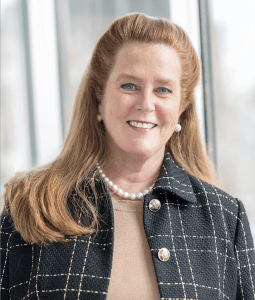
By Stephanie Cohn Rupp and Santhosh Ramdoss
In an era where racial equity-focused funds and corporate programs face mounting legal challenges and pushback, the impulse to retreat is palpable. As CEOs of two sustainable investing organizations, we have been alarmed to see so many of our industry colleagues back down by changing their commitments or taking down DEI webpages.
In the corporate world, DEI professionals have been laid off in 2023, despite 2020 commitments to equity work after the murder of George Floyd. The lawsuits against DEI funds, most notably the Fearless Fund, have also created anxiety.
In the United States, those who control and manage financial capital have an incredible opportunity to help build a more equitable economy and society. The question for us as investors, allocators, and advisors is, what should we do in response to the pushback? We believe this is the moment to reinforce and clarify our commitments, not relinquish them.
The journey toward racial equity investing has been arduous, yet we are just getting started.
Central to this movement are several key tenets. First and foremost is the recognition of capital as an equalizer, balancer, and normalizer. Strategic, race-focused investment can open doors and level playing fields, particularly for communities that have long been marginalized. The transformative role of capital extends beyond mere financial transactions; it’s about acknowledging past harms and providing restorative solutions.
Clear Signs of Progress
During the past decade, we have seen the emergence of a new generation of diverse and underrepresented fund managers across asset classes. We have also seen endowments, and the intermediaries that advise them, increasing allocation capital to these diverse managers, overcoming the misperceptions of “first time fund managers.”
More importantly, allocators have started asking questions about diversity and equity to everyone in their portfolio, and often these questions are a critical part of their investment decision-making process.
This movement has also spurred a host of restorative, minority-focused solutions which aim to leverage capital as a tool to create wealth in communities of color which was plundered from them or prevented through generations of systemic racism. Community Development Financial Institutions (CDFIs) and innovative ownership structures like Employee Stock Ownership Plans (ESOPs) and share-ownership models in real-estate are two examples of many community wealth building approaches.
Lessons From Gender Equity Investing
The trajectory of gender lens investing (GLI), which predates racial equity investing by a decade or so, provides encouragement. Initially, the impact investing sector scarcely acknowledged the critical intersections of capital and gender. The primary narrative, predominantly focused on broader social and environmental issues, often overlooked the nuanced dynamics of gender.
However, persistent efforts by key stakeholders have shifted this paradigm. Veris was among the earliest wealth management firms to focus on gender lens investing. In the firm’s first scan of gender lens investments in 2014, Veris reported that GLI assets in public market strategies totaled $100 million. By the time Veris published its 2018 report, GLI-mandated investments had grown to $2.4 billion.
There is still more work to be done, but GLI investing has become much more mainstream. In 2023, the 2X Challenge, led by 2X Global, raised $16.3 billion in gender lens investments during a two-year period (2021 and 2022), well exceeding their original goal of $15 billion This kind of growth can be seen across asset classes. Parallel Finance reports that, at the end of Q3 2023, gender lens fixed income assets under management was $14.6 billion.
As GLI AUM has grown, public perception of the importance of investing in women has changed for the better. Even mainstream firms are now publicly making the case that investing with a gender lens might lead to better returns.
With a mindset of scarcity, some assumed a decade ago that investing in women or with a gender-lens would take away from men – but the opposite is true. Investing in women benefits GDP growth, particularly in developing nations, and fuels the economy for all.
Practical Measures For Wealth-Building
As with gender lens investing, racial equity investing addresses systemic barriers and historical inequities through practical measures that create sustainable wealth-building opportunities.
We must work together to help address the racial wealth gap in the United States. The most recent Survey of Consumer Finances showed that in 2022, the typical White family in the United States had about six times as much wealth as the typical Black family, and five times as much as the typical Hispanic family. This chasm underscores the urgent need for focused investment strategies. We believe that by funneling resources into investments that grow opportunities for wealth building within communities of color, expanding equitable access to affordable capital for business owners and homeownership for example, investors can help close the gap.
This is not only morally desirable, but as with gender lens investing, investing in minorities benefits the whole of society. According to a recent McKinsey report, advancing racial equity and achieving inclusive growth in the United States would mean an additional $6,000 to $8,500 in annual income per capita. They have estimated that closing the Black–white and Hispanic–white racial wealth gaps would boost consumption and investment within the U.S. economy by an additional $2 trillion to $3 trillion.
Amplify Efforts through Collaboration
In response to pushback and legal challenges, our resolve must be to not only continue our efforts but to amplify them through collaboration and communication. We must bring together diverse voices and resources to bolster this cause. For example, easy steps include investing in restorative, race-centered funds like Blackstar Stability, Apis & Heritage, and the Dearfield Fund for Black Wealth, or investing in Venture Funds such as Impact America Fund which both Gary Community Ventures and Veris have supported in multiple ways.
The path to racial equity in investing is fraught with obstacles and with risks — including the risk of weaponizing the mission. The greatest risk is holding on to a scarcity mindset, which assumes a zero-sum game, pitting populations against one another or focusing on the politics of identity.
There is no need for this movement to become conflictual. The reality is that investing in minorities and in women benefits all of society and the economy as a whole: creating more wealth, and thus more consumption and investment. It’s a journey worth continuing for all involved.
It’s time to double down and not back down, for the future of equitable investing and the promise of a just and thriving economy.
*****
Stephanie Cohn Rupp is chief executive officer and a partner at the impact investing focused wealth management firm Veris Wealth Partners. Santhosh Ramdoss is president & CEO of Gary Community Ventures, a philanthropic organization based in Colorado. He also serves as the organization’s chief investment officer.