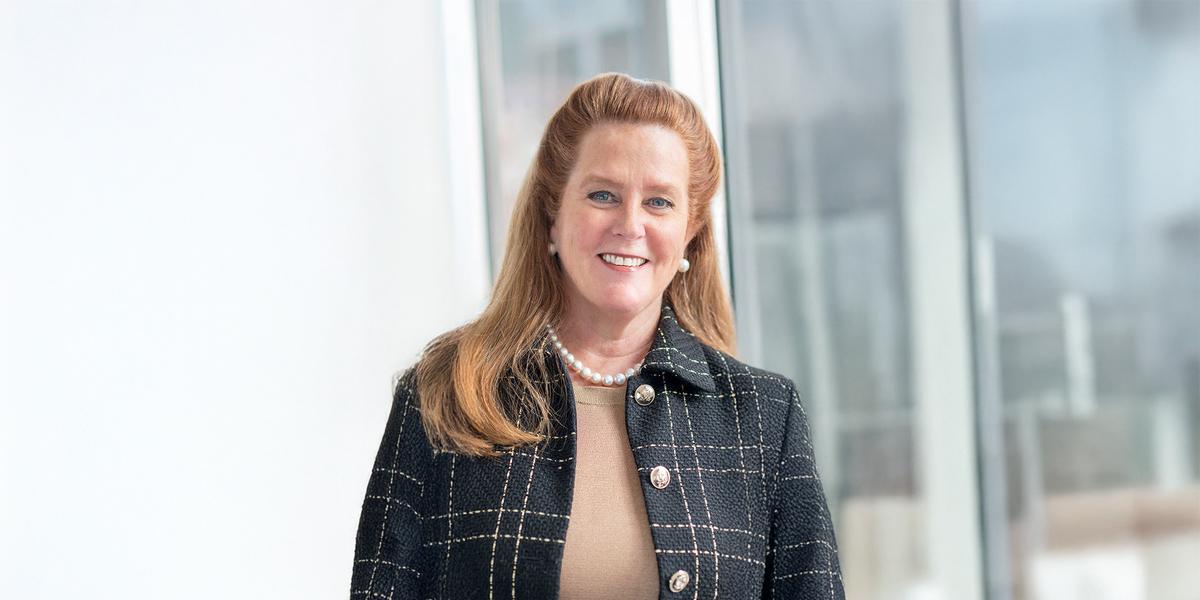
Kendra E. Davenport, president and CEO of easterseals, is a seasoned disability rights advocate and nonprofit leader. Her career includes pivotal roles in organizations such as Operation Smile and Africare. Easterseals has 70 affiliates covering 48 states and the District of Columbia. She is a sought-after speaker and expert in operations of both nonprofits and for-profits.
You’ve been in the nonprofit space for decades. Have you previously seen this level of chaos?
The nonprofit sector has weathered many challenges over decades, from economic shifts and international conflicts, to recessions, and of course, the pandemic. What we are experiencing now feels different. The sector has never ever before felt so unsupported and even abandoned by so many traditional sources of support, but primarily the federal government.
Degraded support has been compounded by a ripple effect causing corporations, foundations, and individual donors to pause or rethink their giving policies and strategies, creating a chilling impact on nonprofits that feels unprecedented. I have always believed there are some lessons that you can only learn in a storm and right now, I think we’re all working to find those lessons and striving to emerge intact.
You’ve been a leader at both international and domestic organizations. Do you have a preference?
I appreciate different aspects of working for international and domestic organizations. Around the world, the needs are vast and often urgent, particularly when it comes to addressing social determinants of health. That urgency has always been compelling to me. I have had the good fortune of working extensively on programs in several African countries and in Central America, where NGOs operate with tremendous local support, which makes the work especially gratifying and meaningful.
Here at home, I think nonprofits are often undervalued, largely because there isn’t widespread awareness of their significant impact on society. I believe if the public was more aware of how much nonprofits contribute to communities across the country, and how many lives they impact every day, support for their missions would be more robust and consistent.
I do not believe people outside the sector understand the mechanics of how nonprofits operate — that nonprofits must raise every dollar needed to fund both operations and programs. A greater understanding of this would underscore the importance of financial donations and foster more appreciation for the resourcefulness, efficacy, and efficiency that is synonymous with many nonprofits.
The sector is known as NGOs, or nongovernmental organizations, by those outside the United States. But it seems government, i.e. politics, is always a major component of the charitable sphere. Is the sector stuck with government, despite best intentions to stay at arm’s length?
When government and NGOs work in partnership, so much more is possible. I believe NGOs act as a major extension of the federal government — expanding, deepening, and concentrating government programs in important, complementary ways. Currently, however, it is concerning that many government programs and support nonprofits have long relied on to provide and maintain essential services are being significantly reduced or eliminated, especially those that assist our most vulnerable populations.
While I understand the need for accountability and oversight, policy adjustments might be narrowing support in ways that overlook the realities of nonprofits and the people we serve. I believe some of the policy changes that have led pivotal government agencies to close or eliminate support they formerly provided to nonprofits have been indiscriminate and arbitrary.
I remain hopeful that at some point in the near future, the current administration will invite leaders from the nonprofit sector to engage in furtive discussions about how we can partner more effectively with the federal government for the betterment of the American people. The current administration could seize the opportunity to redouble critical services and programs that could do everything from help employ the growing number Americans experiencing unemployment, to eradicating hunger, to making our society the more accessible for more than 70 million disabled Americans.
These are all things that are well within our reach. By partnering — truly partnering — in intentional and sustainable ways, the nonprofit sector, in collaboration with the federal government, could create life-changing opportunities and lasting positive change for all citizens from coast-to-coast.
Ask 50 CEOs their definitions of leadership and you’ll get 50 variations. What is your definition of leadership?
Leadership to me is about empowering people to do their best and creating a culture that encourages collaboration. It’s also about treating everyone with respect but taking care to recognize and champion high performers who act as organizational drivers. Doing so helps cultivate a desire among people at all levels to consistently do their best to support not just their individual ambitions but to advance collective initiatives.
What are you reading right now?
I tend to read a few books at a time and wish I had more time to read. Currently, I’m reading Secret Formula by Frederick Allen, which explores how marketing and salesmanship made Coca-Cola so ubiquitous and successful. I’m also reading You’re Invited by Jon Levy, which is about creating meaningful personal and professional connections. Other books I have read recently that really resonated with me include My Life in Full by Indra Nooyi and The Alice Network by Kate Quinn. I also read anything by Scott Galloway and faithfully consume The Atlantic. On weekends, one of my most coveted pleasures is reading The New York Times and The Washington Post.
Who is your mentor and what did you take from that person that you use now?
I have been fortunate to have several mentors throughout my life, but my father was by far the most impactful. He passed away earlier this year, and I deeply miss the gut checks he offered, his always sage and thoughtful advice, and his constant encouragement. I continue to draw upon the many lessons he taught me and strive to emulate the examples he set for me and my siblings.
The most prominent trait I think I have honed because of his guidance and example is discipline. While I don’t think I practice discipline as consistently as he did, there are many things I have become resolutely disciplined about that make me more effective in critical ways.
What drives you each day other than mission?
I think, like many, many women, I have been underestimated throughout most of my professional life — something I didn’t fully realize until I was well into my career. But having been managed by people who either failed to recognize my potential or sought to tamp it down strengthened my resolve to exceed their low expectations of me. Over time, the desire to prove to myself that I could be and do more than others thought possible fueled my initiative and drive.
Today, I am very goal oriented, and I enjoy my work immensely. Those two things drive me now.
In a few words, you’ve got a staffer who wants to leave the sector for myriad reasons. Other than mission, what’s the one thing you would say to make them stay?
I think when someone makes up their mind to make a change — or to leave an organization, in this case, the nonprofit sector — trying to convince them otherwise is often futile and only delays the inevitable.
We get hung up on what we perceive as conventional career paths, which I don’t believe exist today. I feel it’s entirely possible to pause, to change course in dramatic fashion, and even to make a U-turn if something doesn’t work out.
There are lies, damned lies and then there are statistics. A recent study showed that just 5% of the population think that they have had an encounter with a nonprofit yet 10% or 11% of the workforce is nonprofit. Where is the disconnection and how is that fixed?
People are bombarded with information every day, often to the point of complete overload. Getting important points across to people requires clarity and resonance. The nonprofit sector needs to do a better job communicating, and one of the most effective ways is through candid, heartfelt storytelling.
By humanizing our missions, we help the public connect to the people we serve and support. In doing so, we foster greater understanding. Once people truly understand a nonprofit’s mission, they are far more likely to notice and value its impact.
You’ve got 30 uninterrupted minutes where business is not allowed. What are you doing?
Connecting with people. Everyone we encounter has the potential to be helpful, expand our network, open doors that lead to new relationships or become our friend. Remaining open-minded and welcoming new connections is game-changing. As an extrovert, I’m always open to meeting new people and to making introductions on behalf of people I care about and believe in. Some of my most trusted relationships came about through introductions that were made by colleagues or friends. Continually expanding my circle keeps me current and makes life more interesting.